 Skip to content
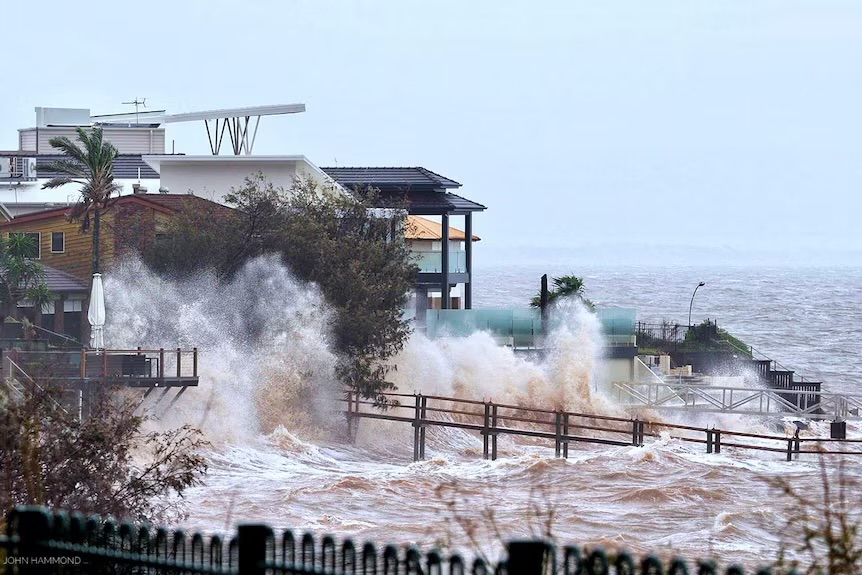
King tide floods broke records up and down the West Coast this Thanksgiving week. On Wednesday, November 25, six tide gauges in California tied or set all-time records, including Monterey, Santa Barbara and San Diego. San Diego and Los Angeles saw their highest coastal water levels recorded in more than a century. Some of these records were set just a month earlier, during the king tides in late October.
King tide is the highest tide of the year. This happens when the Sun, Moon and Earth are aligned when the Moon is at its closest point to us. Their combined gravity pulls the ocean higher than ever. King tides happen every year, and often they mean a wet parking lot or a flooded beach road. This year is different because a few other things are piling on top of the flow.
The first is El Nino. It’s a weather pattern where the Pacific Ocean is unusually warm, and it’s strong this year. Warm water takes up more space than cold water, so the sea sits a foot higher than normal off the coast of California. NOAA’s Climate Prediction Center has a 60 percent chance of an El Nino becoming historic this winter. El Niño also sent a Kelvin wave ashore. A Kelvin wave is not a wave that you can see breaking. A slow pulse of warm water moving across the ocean raises the sea level where it falls. On top of all that came a full moon, a series of Pacific storms that brought huge swells to the coast, and decades of sea level rise that raised the starting line. When all of these are put together, the ocean comes out into the street.
The waves were part of the damage. Breaking waves reached 30 feet along parts of the California and Oregon coasts this week, and the National Weather Service warned of 20- to 30-foot breaks. Early November storms sent 25- to 35-foot waves ashore, with 40- to 50-foot sets at favorite big-wave surf spots like Mavericks.
In the Pacific Ocean, just south of San Francisco, part of the Pacific Ocean Bridge collapsed into the ocean on Wednesday after waves crashed ashore. Streets and homes near the bridge flooded, and residents battled water on Thanksgiving Day. In San Francisco, water spilled over barriers along the Embarcadero onto sidewalks and streets, and the city broke its November water level record with a tide of more than 8 feet. Waymo took its self-driving cars off Bay Area roads for a while due to weather and tides. Across the Bay, authorities shut down the Posey pipeline between Oakland and Alameda as a precaution and reopened it Wednesday evening.
Southern California was also hit again. Los Angeles Harbor tied the all-time record it set in October, and Santa Barbara and La Jolla set new marks. In Huntington Beach, the city closes Pacific Coast Highway between Seal Beach Boulevard and Warner Avenue on weekday mornings during high tide. Sunset Beach residents, who watched waves break through the sea walls in October, packed up to 300 sandbags each and made it through with minimal flooding. Further south, waves washed away railroad tracks, and Amtrak suspended Pacific Surfliner service between Irvine and Oceanside on Thursday. The Port of Ventura District has declared a state of emergency and closed Port of Ventura beaches, parking lots and boat ramps.
In the North, Oregon was beaten. On Tuesday, the tide gauge in Charleston, Oregon set an all-time record, surpassing the reading set since New Year’s Day 2006. Flooding closed Highway 101 near Coos Bay, and Highway 42 was also down. Catching Slough Road was under water and although every motorist got out, several cars were stranded. A Cannon Beach man and his dog were swept away by water near Ecola Creek, and both escaped unhurt. The tide gauge in Westport, Washington read 7 feet, the main flood stage, on both Monday and Tuesday. Marine View Drive in Ocean Shores flooded as the Army Corps of Engineers made emergency repairs to the breakwater.
Made to order and delivered to your door.
No cities were actually flooded. The flood came at high tide, generally covering roads, yards and first floors of houses, then receded as the tide receded. In some places the water stood 3 feet above the ground at the top.
King tide flooding doesn’t stop at the beach, and some of the worst damage this week hit cities that aren’t generally on the ocean. When the tide rises this high, it pushes seawater into rivers, bays and creeks and back through storm drains. Waldport, Oregon flooded when Lake Ekman overflowed onto Highway 34, causing significant flooding of Crestline Drive. In Nehalem, a small river town on the Oregon coast, flooding shut down Highway 101 at H Street. Tillamook closed Frazer Road for several days. In Cutler City, water nearly covered a road and entered homes and garages through a breached berm where flooding occurs every year, officials said. Raymond, Washington, on the Willapa River, also lost Highway 101 to floodwaters. In California’s Marin County, water came not from the open ocean but from San Francisco Bay, flooding the Bridgeway and Marinship area in Sausalito and prompting evacuation warnings.
The East Coast had its turn a month ago. King tides in late October flooded streets in Charleston and Myrtle Beach, South Carolina. Virginia Key in Miami recorded its highest king tide ever and the third highest water level in three decades. In St. Augustine, Florida, a nor’easter king came in at high tide and pushed the Matanzas River over its banks, and people paddled kayaks through flooded streets.
More is coming. Forecasters are expecting king tide flooding again during Christmas week and late January. Newport Beach is warning residents that tides could reach 9 feet by Christmas Eve. Scientists tracking sea-level rise say the water you see during this winter’s king tides is close enough to look like a normal high tide in the coming decades.