Why Jimmi Simpson’s Heartbreaking Dead City Exit Cut Deeper Than Any Walker Bite
If you’ve covered the zombie beat as long as I have, you develop an ear for the exact moment an actor knows their days are numbered. In The Walking Dead universe, getting attached to a guest star is a rookie mistake. Showrunners treat dynamic newcomers like matchsticks: strike them against Jeffrey Dean Morgan or Lauren Cohan, let them burn brilliant and hot for seven episodes, and blow them out before the credits roll on the season finale.
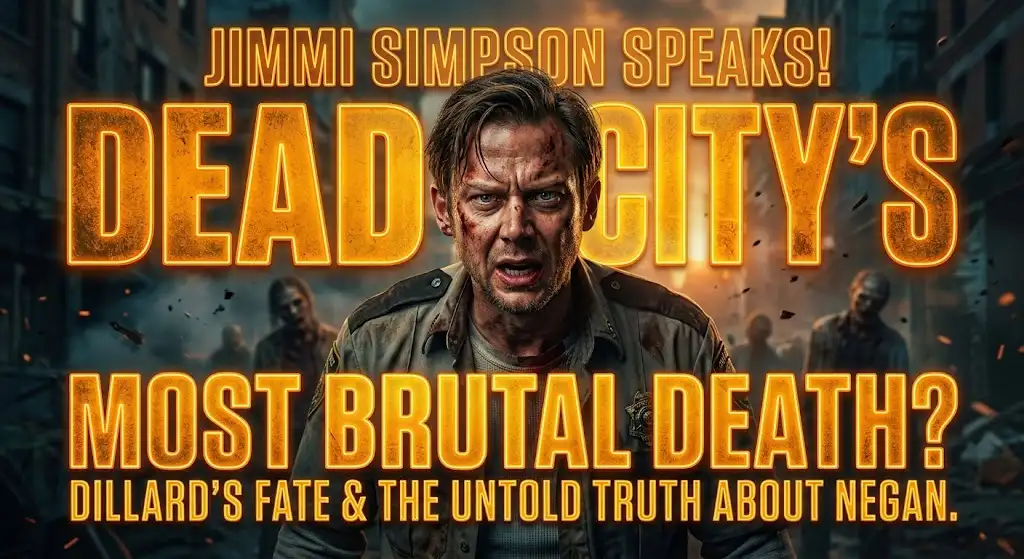
Yet even with that built-in cynicism, what Jimmi Simpson pulled off as Mason Dillard in the Season 3 finale of The Walking Dead: Dead City (“Tenebrae”) felt fundamentally different. It wasn’t just another splatter-fest casualty; it was an opera of raw, wounded ego disguised as an apocalypse brawl.
Simpson spoke with Entertainment Weekly about that bloody final showdown, Negan’s accidental hand in creating a monster, and the genuine real-world love affair he developed with Morgan off-camera.
The Anatomy of a High-Stakes Heartbreak
Dillard started the season as an eccentric breath of fresh air—an ex-undercover cop holed up in a Manhattan dive bar, surviving off a bizarre vertical food chain and finding peace with two pet walkers he spoke to like drinking buddies. Then came Negan.
Negan did what Negan always does: he brought noise, swagger, and chaos. But he also brought warmth. For the first time in years, Dillard began believing that the living might actually be worth the hassle.
When Negan put down Dillard’s undead companions, the illusion shattered. In Simpson’s mind, Dillard’s rapid spiral into madness wasn’t born out of bloodlust; it was the catastrophic meltdown of someone whose heart just got ripped out of their chest.
“Dillard would have lived happily ever after if Negan didn’t show up,” Simpson noted. “For Negan to create this idea that humans are good too, and to take that all away… It’s like being in the state of being broken up with by someone that you were head over heels in love with. You have those temporary thoughts of, ‘I hope they feel the way I feel. You’re going to take it away from me? I’ll take everything from you.'”
That insight re-frames the back half of the season. When Dillard cut his own face, strapped on his old police uniform, and rallied the unstable “Dead Squad,” it wasn’t standard bad-guy maneuvering. It was an abandoned man retreating into his darkest, most cynical armor because hope had burned him twice.
The Mercy of the Bite
By the time the climax hits in “Tenebrae,” Dillard has Maggie and Negan cornered, forcing a twisted loyalty test that ends with Negan reluctantly stabbing Maggie to buy an opening. When Maggie retaliates and severs Dillard’s arm, the fight abruptly drains away. What’s left is two broken men on a cold floor.
Instead of finishing him with a knife to the skull, Negan cradles Dillard. He lets him bleed out and allows him to turn—a decision that would be monstrous in any other context, but here serves as a grim brand of understanding. Dillard was terrified of being left behind by the living; in death, he gets to wander Manhattan alongside the quiet horde he spent years protecting.
Simpson’s layered performance gave that ending an emotional weight that elevated what could have felt like a rushed villain sprint.
Behind the Scenes: The Bromance That AMC Couldn’t Save
Perhaps the most charming takeaway from the post-finale chatter is how much the cast fought to prevent Dillard’s demise in the first place. Morgan openly admitted on the press circuit that he went to the writers pitching alternate endings where Dillard survives, desperate to keep Simpson around for Season 4.
The obstacle? Jimmi Simpson works constantly.
Between stage commitments, prestige drama runs, and an enviable roster of guest spots, locking down an actor of Simpson’s caliber for multi-year franchise duty is a logistical nightmare. Simpson went in knowing Dillard’s journey had an expiration date, which let him build toward that tragic finale beat with zero hesitation.
Off-screen, the friendship between Simpson and Morgan didn’t end when the cameras cut. Simpson revealed the two still stay in close contact, regularly firing off text messages that simply say, “I love you.”
In a franchise that thrives on betrayal, misery, and severed limbs, it turns out the best love story in Manhattan happened when the director called cut.